Siddha Medicine: Traditional Preventive Healthcare for Holistic Wellness
Siddha Medicine as a Preventive, Holistic Health System: A Global Perspective
The worldwide increase in chronic non-communicable diseases, mental health disorders, and unhealthy aging has exposed fundamental limitations in disease-centred healthcare models. While contemporary medicine has achieved remarkable success in diagnostics and acute interventions, it continues to struggle with prevention, long-term functional health, and sustainability. In response, global health policy increasingly emphasizes preventive , people-centred, and integrative approaches to healthcare.
Within this evolving landscape, the Siddha medical system , rooted in the Tamil knowledge tradition, presents a coherent and time-tested holistic health framework with prevention at its core.
From Functional Imbalance to Clinical Disease
Siddha medicine views disease as the final manifestation of prolonged functional imbalance involving digestion, metabolism, lifestyle, mental stress , behavior, and environmental exposure. Clinical illness represents only the visible portion of a deeper process. Consequently, Siddha practice prioritizes early identification of imbalance and restoration of physiological harmony, rather than focusing solely on symptom suppression.
This conceptual model closely aligns with contemporary systems thinking and preventive health strategies.
From A Whole-System Approach to Healing
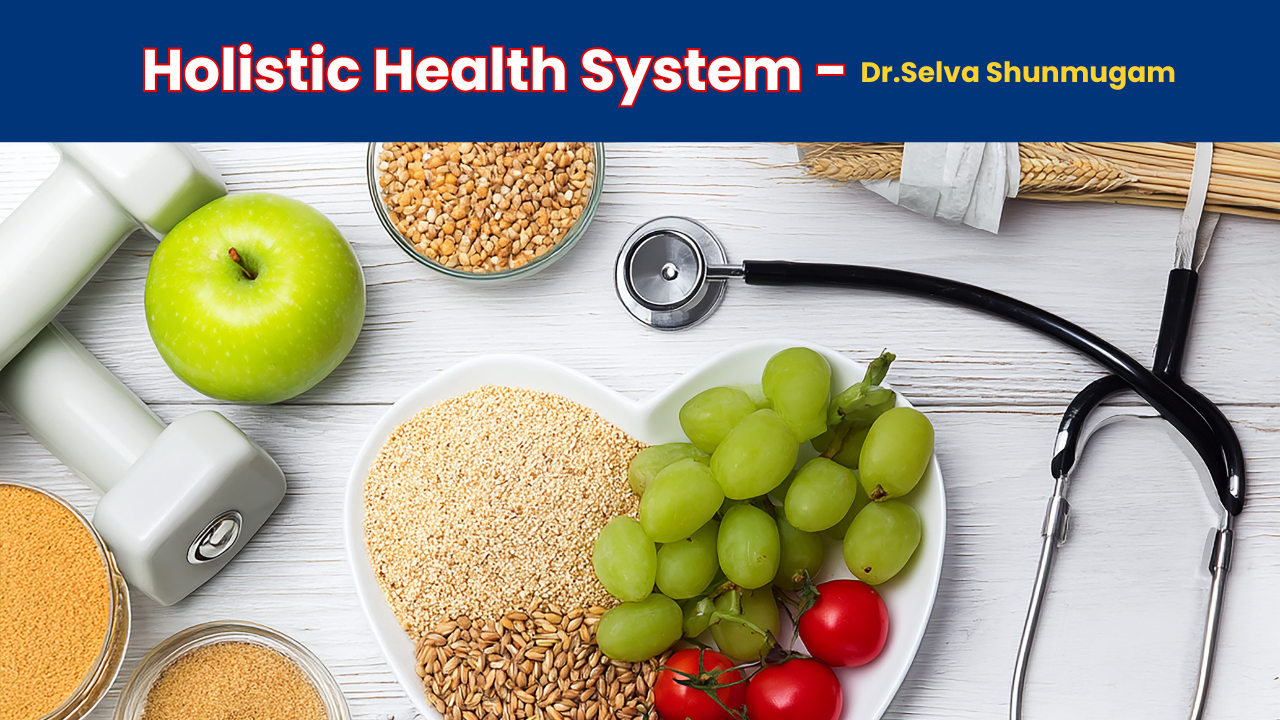
Siddha medicine is not limited to pharmacological interventions. It integrates dietary regulation, daily and seasonal routines, physical practices, breathing techniques, mental discipline, and ethical conduct as essential components of health maintenance. These interventions strengthen the body’s innate capacity for self-regulation and resilience, supporting health at physical, psychological, and social levels.
Such a comprehensive approach reflects modern understandings of health as an interconnected system rather than isolated organ-based pathology.
Prevention as the Core of Medicine
In Siddha philosophy, prevention is the primary responsibility of medicine. Constitution-appropriate diet, digestive balance, circadian alignment, and lifestyle regulation are central strategies for reducing disease risk before structural pathology develops. This prevention-first orientation offers a sustainable pathway for addressing the global burden of chronic disease and escalating healthcare costs.
Personalized and People-Centred Care
Siddha medicine adopts an individualized approach that accounts for variations in constitution, age, occupation, mental state, and environmental context. Care is tailored to the person rather than the disease label alone. This principle resonates with global calls for people-centred and culturally responsive healthcare, particularly in diverse populations.
Non-Pharmacological Interventions for Functional Health
A distinctive strength of Siddha medicine lies in its emphasis on low-risk, non-pharmacological interventions, including dietary therapy, yoga, breathing practices, meditation, and Varmam (vital point stimulation). These approaches support autonomic regulation, stress adaptation, pain modulation, mobility, and cognitive health, while reducing reliance on long-term medication.
Healthy Aging and Chronic Disease Prevention
Siddha philosophy understands aging as a modifiable biological process, shaped by digestion, tissue nourishment, mental clarity, and disciplined living. By addressing these determinants early, Siddha medicine contributes to the prevention of metabolic disorders, cardiovascular disease, neurodegenerative conditions, and mental-health challenges, supporting healthspan rather than longevity alone.
Toward Integrative Global Health Systems
Siddha medicine does not seek to replace modern biomedicine, but to complement it through a prevention-centred, holistic framework. Its alignment with global health priorities—including traditional medicine integration, self-care, and sustainable healthcare—positions Siddha as a valuable knowledge system for contemporary health challenges.
In an era of chronic disease and escalating healthcare demands, Siddha medicine offers a vital reminder: The future of healthcare lies in protecting health, not merely treating disease.
References
- 1. World Health Organization. WHO Global Report on Traditional and Complementary Medicine. Geneva: WHO; 2019.
- 2. World Health Organization. WHO Traditional Medicine Strategy 2014–2023. Geneva: WHO; 2014.
- 3. World Health Organization. Integrated People-Centred Health Services: Global Framework. Geneva: WHO; 2016.
- 4. Subbarayappa BV. The roots of ancient medicine: An historical outline. Journal of Biosciences. 2001;26(2):135–143.
- 5. Ilango K, et al. Siddha medicine and its relevance to modern healthcare. AYU. 2012;33(3):321–325.